

 Facebook
 X
X
 Pinterest
 Copy Link
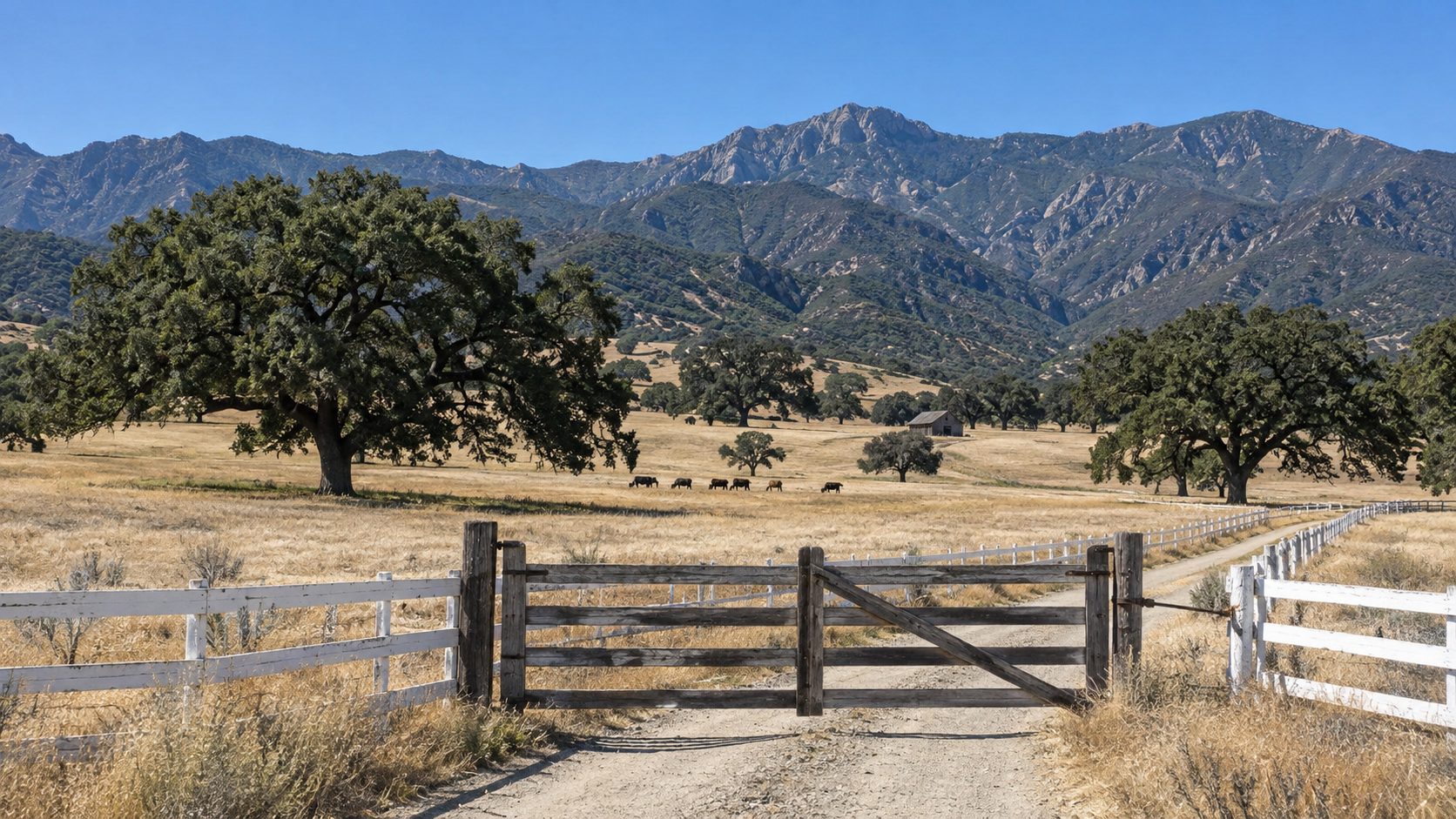
What happens to an abandoned well on a Santa Barbara County property?
An abandoned well in unincorporated Santa Barbara County has two paths. Destroy it under permit, or keep it as an inactive well by filing a letter of intention of future use with Environmental Health. The county treats a well as abandoned once it has gone a year without use. And here is the part that surprises buyers. The county will not permit a new well until the abandoned ones on that parcel are handled first.
That last rule changes the math on a rural purchase.
Picture a parcel outside Los Alamos with an old ag well nobody has run since the last owner. You plan to drill a new domestic well. Santa Barbara County won’t permit the new one until the old one is destroyed or formally declared inactive.
Your well project now has a prerequisite, a cost, and a timeline you didn’t budget for.
Why an abandoned well blocks a new well permit
It sits in Santa Barbara County Code Chapter 34A, the county’s wells ordinance. Section 34A-6(f) reads that before a new well construction or modification permit is issued, “any abandoned wells on the property shall be declared inactive or destroyed.”
Read that as a sequencing rule. Old well first, new well second.
Which raises the obvious question. How do you find out whether there’s an abandoned well out there at all? Start with the Department of Water Resources Well Completion Reports, which publishes driller-filed records and a searchable map, then ask Environmental Health for the parcel’s permit history. Then walk the ground, because a capped pipe in the weeds is often the only thing showing.
Ignoring it is worse than waiting. Section 34A-14 says failure to destroy an abandoned well “will constitute a nuisance,” and the county will act to abate it. Section 34A-17 then makes the property owner liable for the county’s reasonable abatement costs.
Read that as a cost attached to the property rather than to a particular person. Whoever owns the parcel when the county comes calling is the one holding it, which is a good reason for a buyer to settle this before closing and a good reason for a seller to settle it before listing.
One scoping detail that matters. Chapter 34A applies to the unincorporated area of the county. Parcels inside Santa Maria, Lompoc, Buellton, Solvang, or any other incorporated city fall outside it. Those cities set their own rules, so check with the city directly if your property sits inside one. Most well properties in North County are unincorporated, which is why this comes up out past the city edge.
What counts as an abandoned well, and how to keep one instead
Section 34A-2 sets the definition. A well counts as an abandoned well once it has gone a year without use, unless the owner steps in.
Stepping in means both things, not either one. Section 34A-13 says the owner submits a letter of intention of future use, and the county then reclassifies the well as inactive. The physical conditions below are the evidence backing that letter, so filing without maintaining the well, or maintaining it without filing, doesn’t get you there.
Here’s what Section 34A-13 says you have to show:
- The well has no defects that could impair water quality or the water-bearing formations it reaches
- If the pump is out, a watertight cover is fitted that nobody can remove without tools
- The well is marked so it can be clearly seen
- The area around it stays clear of brush and debris
Environmental Health can ask for more proof that the well still works and is not hurting groundwater quality.
Worth knowing if you also own property up the coast. San Luis Obispo County runs a similar one-year rule but uses different paperwork, a Declaration to Maintain an Inactive Well. The two counties are not interchangeable, and filing the wrong form with the wrong agency gets you nowhere.
What the permits cost and who issues them
Santa Barbara County Public Health, Environmental Health Services Division issues well permits on form EHS 46-1. As listed on that application, the fees run:
- Construction of a new or replacement well, $1,276
- Modification, also $1,276, covering deepening, re-perforation, and sealing or replacing the casing
- Destruction, $966, which the form defines as completely filling the well
A $50 Clerk of the Board processing fee is added on top. The application notes an exception for a well that is domestic de minimis or part of a public water system. Ask whether yours is exempt rather than assuming the $50 applies.
The permit fee is not the whole cost. A C-57 licensed water well contractor does the physical work of filling the well, and that bill is separate. It moves with depth, access, and what the casing is made of, so get a bid on the actual well before you assume a number.
The North County office handles this at 2125 South Centerpointe Parkway in Santa Maria. Fees and requirements change, so confirm the current ones with Environmental Health before you budget anything.
A few timing rules are easy to miss. A permit is not transferable and expires a year after issuance under Section 34A-8. Inspections need 48 hours of notice under Section 34A-15. Section 34A-6(e) adds that a well permit stands separate from any other agency’s permit. Clearing Environmental Health doesn’t clear planning or building.
What your lender adds on top
County rules and loan rules are different animals, and the loan usually drives the water test. The same pattern shows up with septic systems at transfer, where the testing comes from buyers and lenders rather than a county mandate.
Start with FHA. HUD’s guidance on individual water supply systems sets water quality at the EPA’s National Primary Drinking Water Regulations, at 40 CFR 141 and 142, where no local standard applies. HUD also requires a test in specific situations. One is a well sitting less than 100 feet from the septic system.
HUD also requires a disinterested third party to collect and transport the sample. Not the borrower, and not anyone else with an interest in the sale.
Every loan program sets its own conditions and lender overlays change. Ask your loan officer in writing what a well property will require, and do it before your loan contingency comes off.
What sellers should do about an abandoned well
Everything above lands on the seller first, because the seller is the only one who can act on it. A buyer can’t pull a permit on a parcel they don’t own yet.
Start with disclosure. California sellers complete a Transfer Disclosure Statement, and most listings here also include a Seller Property Questionnaire. Both ask about the water supply, and an unused or unpermitted well belongs in that answer whether or not you plan to do anything about it.
Then decide how to handle it:
- Clear it before listing. You get a finished permit, a destruction record to hand the buyer, and one less thing for an inspector to find on day twelve
- Keep it as an inactive well. File the letter of intention of future use and meet the Section 34A-13 conditions, then tell the buyer what you filed
- Credit the buyer. Workable, though you’re negotiating it under a contingency deadline rather than on your own schedule
Worth understanding what’s really at stake if you’re selling bare land or a ranch parcel. An abandoned well left in place caps what the next owner can do, because they can’t permit a new well until it’s resolved. That’s a marketability question, not just a paperwork one, and it’s better answered before a buyer raises it.
The drought rules you may have read about
This part causes confusion, so it’s worth walking through.
In March 2022, Governor Newsom issued Executive Order N-7-22. It required counties to get written verification from the local groundwater sustainability agency before permitting new wells in medium and high priority basins. Santa Barbara County adopted an urgency ordinance that May to implement it, covering the county’s medium and high priority basins, Cuyama and the Santa Ynez River Valley among them.
Then it went away. The Governor issued Executive Order N-3-24 on September 5, 2024, terminating the well permitting requirements that N-7-22 and the follow-up order had imposed.
As of September 2026, the codified Chapter 34A carries none of that language, and neither does the current permit application. Your parcel still deserves a phone call, though. Cuyama and the Santa Ynez River Valley are still managed under the state’s Sustainable Groundwater Management Act, with groundwater sustainability agencies overseeing them, and basin rules can sit on top of the county ordinance. Ask Environmental Health what applies where you’re buying.
Sorting through which rules are current and which expired is a real part of buying rural ground in North County. I would rather make that call during your investigation period than have it surface after closing.
Frequently Asked Questions
Does Santa Barbara County require a well inspection when you sell a house?
No. Chapter 34A covers construction, modification, inactivation, and destruction of wells, and it contains no requirement triggered by sale or transfer. Water testing in a transaction comes from your lender and your own inspection contingency. Requirements change, so confirm with Santa Barbara County Environmental Health for your parcel.
Can I drill a new well if there is an abandoned well on the property?
Generally not until the abandoned one is handled. Section 34A-6(f) requires any abandoned wells on the property to be declared inactive or destroyed before the county issues a new construction or modification permit. Budget the time and the destruction fee into your plans, find out during escrow whether the seller will address it, and confirm how the section applies to your parcel with Environmental Health.
How much does it cost to destroy a well in Santa Barbara County?
The application lists $966 for a destruction permit, plus a $50 Clerk of the Board fee unless an exception applies. That is the permit only. The contractor’s work to actually fill the well is separate and depends on depth and access. Confirm current fees with Environmental Health before relying on these figures.
What is a letter of intention of future use?
It’s how you tell Santa Barbara County you still want an unused well. Filing it with Environmental Health, along with keeping the well capped, marked, and clear, reclassifies the well as inactive rather than abandoned. Without it, a year of non-use puts the well in the abandoned category and destruction becomes the default path.
Do these rules apply inside Santa Maria or Lompoc city limits?
No. Chapter 34A applies to the unincorporated area of Santa Barbara County, so incorporated cities set their own requirements. Contact the city directly for a parcel inside city limits. Most well properties in North County sit outside those boundaries.
Buying rural ground in North County
An abandoned well is rarely the reason a deal dies. It’s often the reason a plan slips. The new well everyone assumed was straightforward now waits on the old one nobody mentioned.
Looking at rural ground anywhere around Orcutt, Los Alamos, the Santa Ynez Valley, the Lompoc and Santa Maria areas, and surrounding areas? I’m glad to walk through what the county will want on that specific parcel, whether you’re about to write an offer or working out what to clear up before you list. You don’t need to be ready to move on anything yet.
Call or text Wina Gill for luxury care on every move in San Luis Obispo County and North Santa Barbara County. 805-550-0161 | Century 21 Masters | DRE 02006343
About Wina Gill
Wina Gill is a Realtor and Certified Negotiation Expert with Century 21 Masters, based in Arroyo Grande and serving San Luis Obispo County and North Santa Barbara County. With more than 10 years in real estate, she has completed more than 100 sales totaling over $90 million in sales volume. Wina works as a solo agent, so clients work directly with her from the first conversation through closing. She writes about Central Coast communities, neighborhood differences, and local market conditions. She also covers the property-specific factors that affect buying, owning, and selling a home, so people understand their options before making a move. Reach her at 805-550-0161 or winagillhomes.com.
DRE #02006343



