

Pismo Beach is a coastal city in San Luis Obispo County where the neighborhood you choose can completely change the way you experience living here. Some homes put you within walking distance of the beach, restaurants, and Pismo Pier. Others sit above town with ocean views, on quieter residential streets in Shell Beach, or in hillside neighborhoods where being a few minutes from the water matters more than walking to it.
That difference is important. Buying in Pismo Beach is not simply a matter of deciding that you want to live near the ocean. You also need to decide how close you want to be to the activity, whether views or walkability matter more, what type of home you want, and how much elevation, traffic, parking, or HOA involvement fits your lifestyle.
What Is It Like to Live in Pismo Beach Year-Round?
Living in Pismo Beach feels different from spending a weekend here.
The city stretches well beyond the downtown beach and pier. Residential areas continue north through Shell Beach and into hillside neighborhoods above the coast, while other neighborhoods sit east of Highway 101.
That means everyday life can be very different depending on the address.
Downtown puts you close to restaurants, shops, the beach, and visitor activity. Shell Beach has its own residential feel, coastal access points, parks, and businesses along Shell Beach Road. Homes higher in the hills may trade walkability for views, quieter streets, larger homes, or separation from the busiest coastal areas.
For buyers, that is one of the first decisions I recommend making: decide which version of Pismo Beach fits the way you actually want to live.
Pismo Beach Neighborhoods and Areas
Pismo Beach is made up of several distinct residential areas and City planning areas rather than one uniform beach community.
The right area depends on what matters most to you: walking to the beach, an ocean view, a quieter residential street, a gated or HOA community, access to Highway 101, or simply being close to the coast without living in the center of the activity.
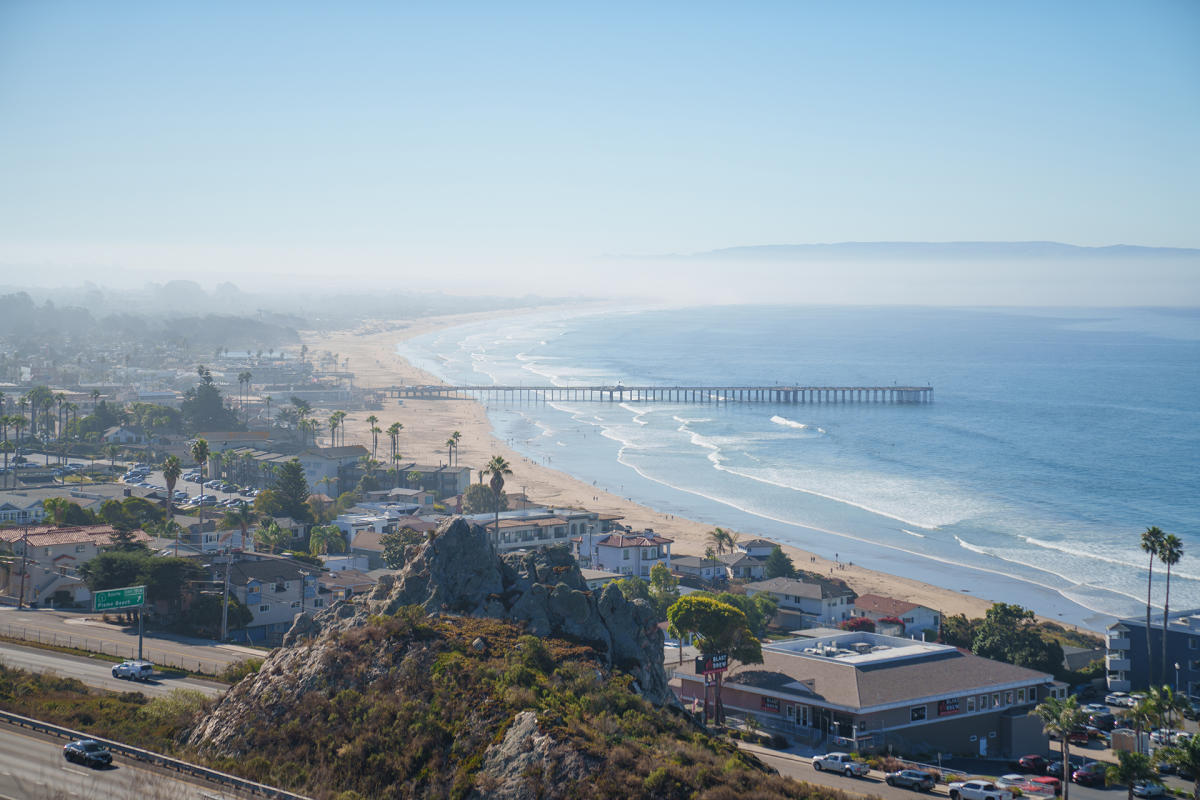
Downtown Pismo Beach
Downtown Pismo Beach is the part of the city most visitors know first. Pismo Pier, the beach, restaurants, shops, hotels, and visitor-serving businesses are concentrated here.
Residential properties range from condos and smaller homes to newer residences and properties positioned to take advantage of ocean proximity or views.
The tradeoff is that this is also the most active part of Pismo Beach. Parking, tourism, weekend traffic, events, and pedestrian activity can all be more noticeable than they are in the residential areas farther from downtown.
Look downtown if: walking to the beach, restaurants, the pier, and town is more important to you than having a quiet suburban setting.
Shell Beach
Shell Beach is part of the City of Pismo Beach, but it has a distinct identity and residential feel.
The area extends along the coast north of downtown and includes homes near Shell Beach Road, residential streets closer to the bluffs, hillside properties, and neighborhoods farther inland. Dinosaur Caves Park, coastal access points, neighborhood restaurants, and Shell Beach Road are part of daily life here.
Housing varies significantly. You may find smaller cottages, remodeled homes, contemporary construction, hillside residences, and properties positioned for ocean views.
Being just a few blocks apart can make a meaningful difference in elevation, view potential, freeway proximity, and how easily you can walk to the coast.
Look in Shell Beach if: you want a coastal residential setting with access to parks, restaurants, and the ocean but do not necessarily want to live in downtown Pismo.
Pismo Heights
Pismo Heights sits above downtown Pismo Beach on the hillside. Elevation is one of the defining characteristics here.
Some homes have broad views over Pismo Beach and the Pacific, while others are positioned toward surrounding hills or neighboring properties. The hills also mean that walking into downtown may look close on a map but feel very different when elevation is involved.
Buyers should pay attention to street grade, driveway access, parking, orientation, and the actual view from the home rather than assuming every hillside property has the same outlook.
Look at Pismo Heights if: elevation and potential ocean views matter more to you than having a flat, walkable route to downtown.
Toucan Terrace
Toucan Terrace is an established residential neighborhood on the inland side of Pismo Beach.
It offers a very different setting from downtown and the homes immediately along the coast. Streets feel more residential, and the neighborhood is convenient to Highway 101, shopping, and other parts of the Five Cities area.
The neighborhood has its own specific-plan history, which is another reminder that Pismo Beach includes both classic coastal neighborhoods and more planned residential areas.
Look at Toucan Terrace if: you want a more traditional residential neighborhood while remaining within Pismo Beach.
Mattie Road and the Pismo Preserve Area
The Mattie Road area sits above and behind portions of Pismo Beach near the hills and open space associated with the Pismo Preserve.
Homes here can feel more removed from the beach activity while still being only a short drive from downtown and Shell Beach.
Topography becomes important. Elevation, hillside conditions, access, views, and proximity to Highway 101 can vary substantially from one property to another.
Look near Mattie Road if: you prefer a hillside setting, access to trails and open space, or a more residential environment above the coast.
Sunset Palisades and the Northern End of Shell Beach
Sunset Palisades is one of the residential areas toward the northern end of Pismo Beach near the coast.
The setting is more residential than downtown Pismo, with proximity to the ocean, coastal bluffs, parks, and Highway 101.
Homes vary in size, age, architecture, and orientation, and ocean exposure can change quickly depending on the particular street and elevation.
Look in Sunset Palisades if: coastal proximity is important but you prefer being outside the downtown core.
Spyglass and Nearby Residential Areas
The Spyglass area sits at the northern end of Shell Beach, west of Highway 101. It includes residential neighborhoods near the coast and the freeway, Spyglass Park, and nearby hotels.
As in much of Pismo Beach, exact location matters. A home may be relatively close to the ocean but also closer to freeway or visitor-serving activity than another property only a few streets away.
Look in the Spyglass area if: you want to be close to the coast and Shell Beach while comparing a variety of residential settings.
Oak Park Heights and the Eastern Side of Pismo Beach
Parts of Pismo Beach extend east of Highway 101 toward Oak Park Boulevard.
These areas offer another version of living in Pismo Beach, one that is more connected to everyday shopping, freeway access, and neighboring Arroyo Grande and Grover Beach than to walking directly to the beach.
For some buyers, that tradeoff works well. You can have a Pismo Beach address while living in a setting that feels more residential than the tourist-oriented downtown.
Look east of Highway 101 if: convenient freeway access and a residential setting matter more than walking to the ocean.
Ocean View, Walkability, or a Quieter Residential Setting?
These are three different priorities, and in Pismo Beach you may have to decide which matters most.
If You Want to Walk to the Beach
Start with downtown Pismo Beach and portions of Shell Beach. But look at the actual route, not just the distance shown online.
Elevation, Highway 101, major streets, and bluff access can make two homes that appear equally close to the ocean feel very different in everyday use.
If You Want an Ocean View
Elevation can help, but a Pismo Beach address does not automatically mean an ocean view.
Orientation, neighboring homes, vegetation, topography, future development, and the exact position of the property all matter. When a view is part of the value of a home, look at what creates and protects that view rather than focusing only on what is visible during the showing.
If You Want a Quieter Residential Setting
Look beyond the downtown core.
Shell Beach, the hills, Toucan Terrace, Mattie Road, Sunset Palisades, and other residential areas may offer a different balance between coastal access and everyday neighborhood life.
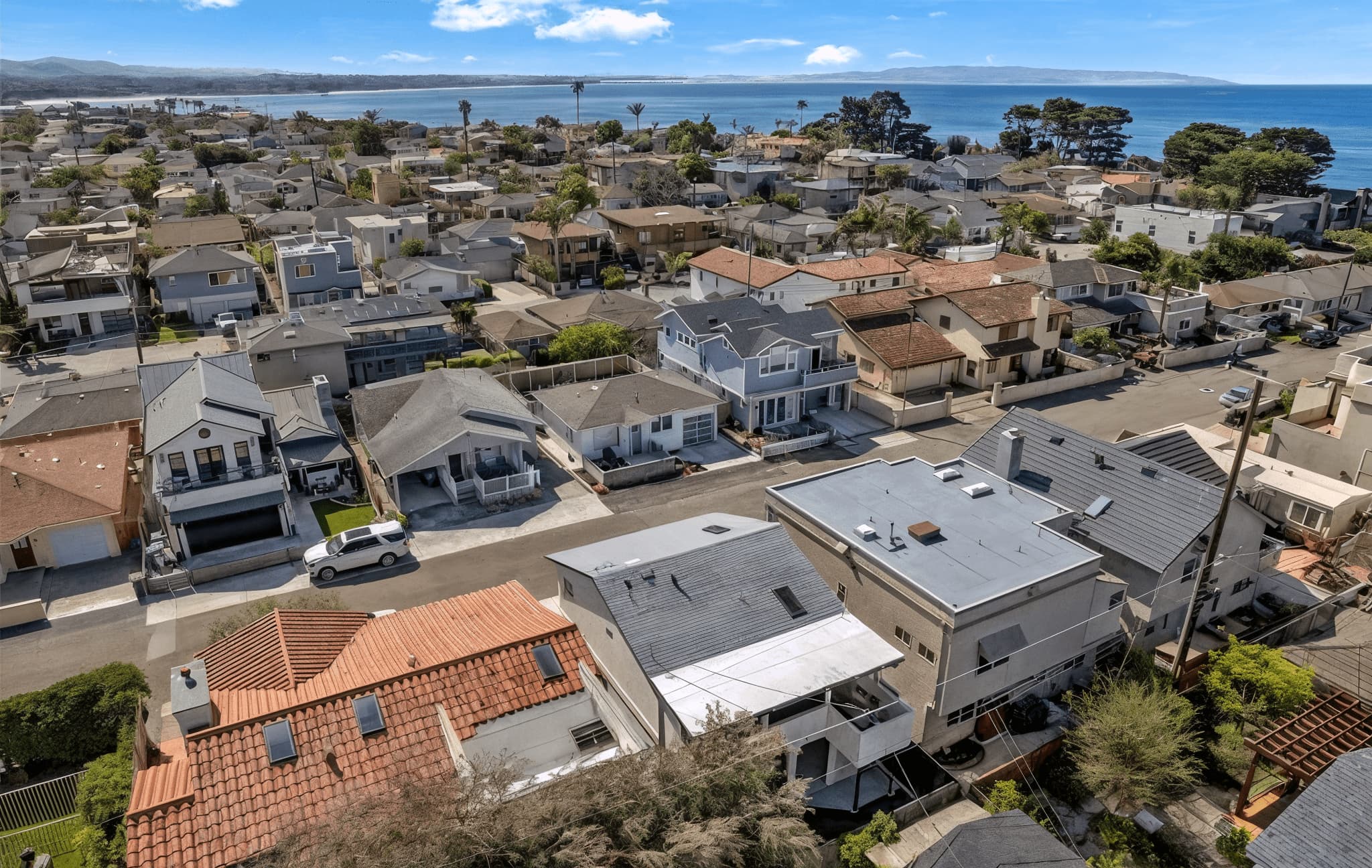
What Types of Homes Can You Find in Pismo Beach?
Pismo Beach has a surprisingly varied housing stock for a relatively small coastal city.
Depending on the area, buyers may find:
- Condominiums near downtown and the coast
- Smaller beach homes and cottages
- Established single-family neighborhoods
- Remodeled coastal homes
- Contemporary construction
- Hillside homes
- Ocean-view properties
- Townhomes and attached housing
- HOA communities
- Larger custom homes
The price of a home is often influenced by more than square footage. In Pismo Beach, value can also be tied to ocean proximity, view quality, elevation, parking, walkability, lot characteristics, and how difficult it would be to reproduce the location.
What Buyers Should Know About Elevation and Coastal Location
Pismo Beach's topography is part of what makes the city beautiful, but it also creates practical questions when buying a home.
A property near sea level can offer easier beach access while being closer to visitor activity. A hillside property may have stronger views and more separation from downtown but may also involve steep streets, sloped driveways, retaining walls, drainage, or other site-specific considerations.
Properties near coastal bluffs or within the City's Coastal Zone may also be subject to planning rules that differ from properties elsewhere in the city.
The City of Pismo Beach uses different zoning codes depending on whether a property is inside or outside the Coastal Zone, and some coastal properties fall within additional appeal or overlay areas.
That is why I recommend checking the specific parcel rather than assuming the same rules apply everywhere in Pismo Beach.
Coastal Planning and Future Improvements
Pismo Beach is a coastal city, and development rules can be more property-specific than many buyers expect.
The City maintains an interactive parcel viewer showing zoning, land-use designation, Coastal Zone status, and applicable overlays for individual properties.
This becomes particularly important if you are considering:
- adding an ADU
- expanding a home
- rebuilding
- changing parking
- altering a bluff-area property
- making significant exterior improvements
A home's existing condition and what you may be allowed to change later are two different questions.
If future improvements are part of your plan, research them before you make the purchase decision.
Condos, HOAs, and Second Homes in Pismo Beach
Pismo Beach attracts buyers looking for primary residences, second homes, and lower-maintenance coastal properties.
Condos and HOA communities can be appealing because they may reduce some exterior maintenance responsibilities, but every association is different.
Before purchasing, review:
- HOA dues
- reserves
- insurance
- maintenance responsibilities
- rental rules
- pet rules
- parking
- special assessments
- governing documents
If you are buying a second home, also think about how the property will function when you are not there. Parking, exterior maintenance, security, stairs, elevator access, storage, and HOA management can matter just as much as the view.
If rental income is part of your plan, verify the current City rules before assuming a property can be used as a short-term rental.
For current information about Pismo Beach rental regulations and other changing relocation issues, read:
Water and Utilities in Pismo Beach
The City of Pismo Beach provides municipal water and sewer service to properties within its service area.
Other services such as electricity, gas, internet, garbage, and communications are provided by outside utility companies.
For most residential buyers, the bigger question is not whether Pismo Beach has municipal service but whether there are property-specific costs, HOA responsibilities, or infrastructure issues that should be investigated during due diligence.
Schools Serving Pismo Beach
Pismo Beach is served by Lucia Mar Unified School District, which serves several communities throughout southern San Luis Obispo County.
School assignments are based on the specific property address. If a particular school matters to your household, verify the attendance boundary directly with the district rather than relying only on an MLS listing or third-party real estate website.
Pismo Beach or a Nearby Central Coast Community?
Buyers looking in Pismo Beach often compare it with Shell Beach, Arroyo Grande, Grover Beach, Avila Beach, and San Luis Obispo.
The better choice depends on what you actually want from your location.
Pismo Beach vs. Arroyo Grande
Choose Pismo Beach when being in a coastal city, staying near the ocean, or having the possibility of ocean views is one of your highest priorities.
Arroyo Grande offers a broader range of inland neighborhoods, larger properties, rural options, and housing settings while remaining close to the coast.
Pismo Beach vs. Grover Beach
Grover Beach sits directly south of Pismo Beach and gives buyers another way to stay very close to the coast.
The two cities offer different housing stock, neighborhood settings, and relationships to the beach, so compare individual areas rather than relying only on the city name.
Pismo Beach vs. Avila Beach
Both are coastal communities, but the experience is different.
Avila Beach is smaller and more geographically tucked away, while Pismo Beach has a larger residential footprint, more neighborhoods, greater access to Highway 101, and a wider range of housing.
Pismo Beach vs. San Luis Obispo
San Luis Obispo may be the better fit if being near downtown SLO, Cal Poly, employment centers, restaurants, and city amenities is more important than living directly along the coast.
Pismo Beach keeps the ocean much closer while still providing relatively easy access north to San Luis Obispo.
What I Tell Buyers About Pismo Beach
Pismo Beach is one of those places where I want buyers to spend time outside the house before deciding how much they love the house.
Drive the street. Walk the route to the beach if walkability matters to you. Stand outside and listen. Look at the elevation. See where you would park. Drive to the grocery store, Highway 101, work, or the places you would use during an ordinary week.
If you're buying for a view, look beyond the view itself. Understand what sits between the property and the ocean.
If you're buying a condo, understand the HOA.
If you're buying near downtown, decide whether you genuinely enjoy the activity or simply liked it while you were on vacation.
And if you're looking in Shell Beach, don't assume every Shell Beach address offers the same experience. A few streets can change the elevation, ocean access, view, and feel of the neighborhood.
The goal isn't simply to buy a home in Pismo Beach. It's to find the part of Pismo Beach that works for the way you want to live.
Frequently Asked Questions About Living in Pismo Beach
Is Shell Beach part of Pismo Beach?
Yes. Shell Beach is part of the City of Pismo Beach, although it has its own distinct residential identity and is commonly referred to by its own name.
Can you walk to the beach from homes in Pismo Beach?
From some areas, yes. Downtown Pismo Beach and portions of Shell Beach offer some of the strongest opportunities for walking to the coast. However, distance alone does not tell the full story. Hills, Highway 101, bluff access, and the street layout can affect how practical the walk actually is.
Does every Pismo Beach home have an ocean view?
No. View potential depends on elevation, orientation, neighboring properties, vegetation, topography, and location. Even homes on the same street can have very different views.
Is Pismo Beach only a tourist area?
No. Downtown experiences significant visitor activity, but Pismo Beach also has established residential neighborhoods in Shell Beach, the hills, Toucan Terrace, Sunset Palisades, Spyglass, Mattie Road, and other areas.
Are there condos in Pismo Beach?
Yes. Pismo Beach has condominiums, townhomes, attached housing, and other HOA properties in addition to single-family homes. Buyers should review the individual association's finances, insurance, rules, maintenance responsibilities, and any rental restrictions before purchasing.
Is Pismo Beach in the Coastal Zone?
Much of Pismo Beach is within the California Coastal Zone, but not every property is. The City uses different zoning rules depending on a property's location, so verify the specific parcel if future remodeling, additions, or development matter to you.
Is Pismo Beach close to San Luis Obispo?
Yes. Pismo Beach is south of San Luis Obispo with access between the two communities via Highway 101. Actual travel time depends on the starting location, destination, traffic, and road conditions.
Where should I live in Pismo Beach?
Start with the lifestyle you want.
Look downtown if walking to the beach, restaurants, and the pier matters most. Consider Shell Beach if you want a residential coastal setting with parks, restaurants, and ocean access nearby. Look into Pismo Heights and other hillside areas if elevation and potential views are priorities. Consider Toucan Terrace, Mattie Road, Oak Park Heights, and other residential areas if you prefer a neighborhood setting and easier access to everyday services or Highway 101.
There is no single best part of Pismo Beach. The best fit depends on how you want to use the home and what you want your normal day to look like.
Explore Pismo Beach Homes
If you are considering Pismo Beach but aren't sure which area fits you, start with what matters most.
Maybe you want to walk to the beach. Maybe an ocean view is non-negotiable. Maybe you would rather have a quieter residential street and drive five minutes to the coast. Or perhaps you are comparing a condo, a second home, and a single-family property and need help understanding the tradeoffs.
That's where I can help.
We can narrow the search to the parts of Pismo Beach that fit how you actually want to live, rather than searching the entire city and hoping the right property happens to appear.
Read My Moving to Pismo Beach Guide
Own a Home Here? Selling a Pismo Beach Home →
Wina Gill, Realtor® | Certified Negotiation Expert
Century 21 Masters Luxury
San Luis Obispo County & North Santa Barbara County
DRE #02006343
Pismo Beach Market Snapshot
Use the current market snapshot to understand how today’s Pismo Beach listings fit into the broader market.



Get In Touch
805-550-0161
DRE #02006343
©2026 All rights reserved. CENTURY 21®, the CENTURY 21 Logo and C21® are service marks owned by Full Realty Services Inc. DBA Century 21 Masters fully supports the principles of the Fair Housing Act and the Equal Opportunity Act. Each office is independently owned and operated.
