

 Facebook
 X
 Pinterest
 Copy Link
When does a coastal development permit apply in San Luis Obispo County?
A coastal development permit is required for most building, remodeling, grading, and land division inside the coastal zone, and in the unincorporated communities of San Luis Obispo County it’s issued by County Planning and Building under the County’s certified Local Coastal Program. The part that surprises buyers is that a county coastal development permit isn’t always the last word, because five categories of development listed in state law can still be appealed to the California Coastal Commission. A 2026 California Supreme Court case out of Los Osos rejected the Commission’s reading of two of those categories on the facts before it, and a 2025 state law carved larger housing projects out of both.
If you’re buying in Los Osos, Cayucos, Cambria, Oceano, Avila Beach, or anywhere else inside the coastal zone, this is the difference between a remodel you can plan around and one that sits in limbo for a year. Here’s how it actually works right now.
Your county approval can still be appealed, but only in five situations
Once a local government has a certified Local Coastal Program, the Coastal Commission can’t review just anything. California Public Resources Code section 30603(a) says a local action on a coastal development permit may be appealed to the Commission “for only the following types of developments,” and then lists them.
The five categories that make a local approval appealable
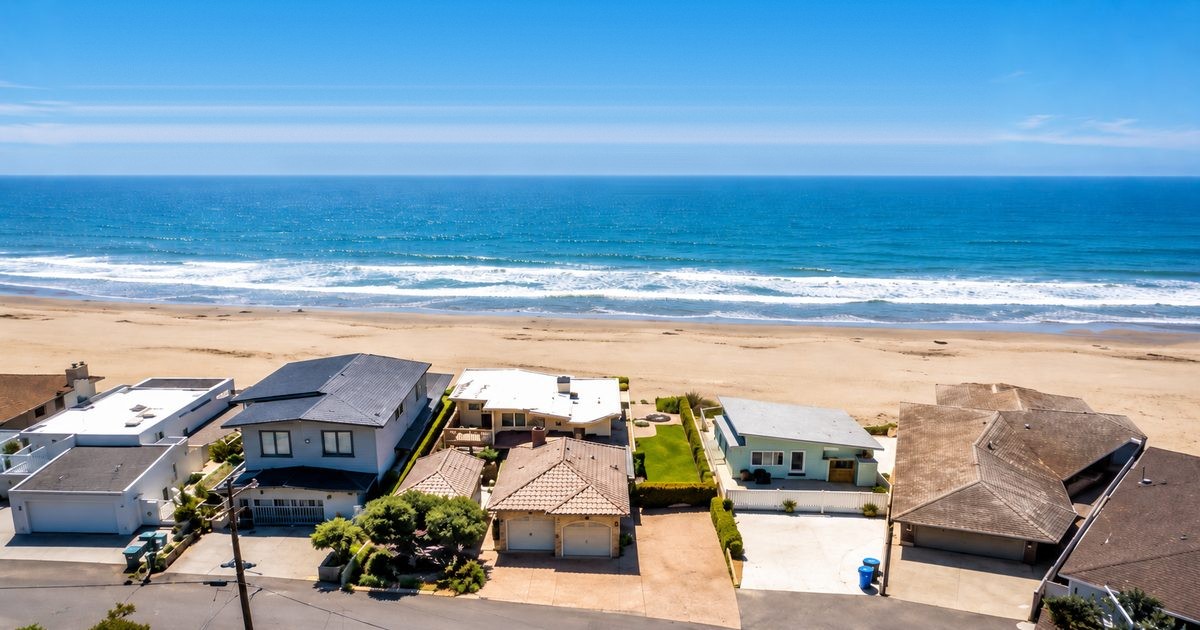
- Development between the sea and the first public road paralleling the sea, or within 300 feet of the inland extent of any beach, or of the mean high tideline where there’s no beach, whichever distance is greater.
- Development on tidelands, submerged lands, or public trust lands, or within 100 feet of any wetland, estuary, or stream, or within 300 feet of the top of the seaward face of any coastal bluff.
- Development in a sensitive coastal resource area.
- Development approved by a coastal county that isn’t the principal permitted use under the zoning ordinance or zoning district map.
- Any development that’s a major public works project or a major energy facility.
Read that list against a real property and you’ll see why location drives everything. A home three blocks inland in Los Osos sits in a different posture than a bluff-top lot in Cayucos, even though both need a coastal development permit.
The first two categories are measured in feet, so they turn on survey lines and mapped resources rather than on anyone’s judgment. They’re also the two that haven’t been narrowed by either the 2025 law or the 2026 decision below.
Why the coastal development permit timeline matters in escrow
The clock is short and it’s worth knowing before you set a contingency period. Section 30603(d)(1) gives the local government seven calendar days from the date of its action to notify the Commission. Section 30603(c) then says the local action becomes final at the close of business on the tenth working day after the Commission receives that notice, unless an appeal is filed in that window.
The Commission’s own appeal information sheet adds the practical conditions. An appeal has to come from the applicant or an “aggrieved person” who took part in the local process, or who couldn’t take part because notice was improper, and all local appeals have to be exhausted first. The County says the same thing on its coastal appeal page, which states that all possible local appeals must be exhausted before an appeal is filed with the Commission. If an appeal is filed, the Commission first decides whether it raises a “substantial issue” before taking up the merits.
That ten working day window is the single most useful thing on this page for a buyer. When I’m working with someone on a coastal-zone property where permits matter, that window and the Notice of Final Action date are what we build the timeline around.
What the Los Osos Supreme Court decision changed
In Shear Development Co., LLC v. California Coastal Commission, case number S284378, the California Supreme Court ruled unanimously for a Los Osos homebuilder. San Luis Obispo County had approved a coastal development permit for homes in the second phase of an existing Los Osos subdivision, and the Coastal Commission took the appeal and denied the permit.
The Court held the Commission had no appellate jurisdiction, and it reached that in three steps worth understanding:
- Interpreting a county’s Local Coastal Program to decide whether the Commission has appeal jurisdiction is a legal question, so a court exercises its own independent judgment. On the record in that case, the Court gave neither the County’s nor the Commission’s reading of the Local Coastal Program any deference.
- The site wasn’t in a sensitive coastal resource area, because the County’s LCP designation wasn’t intended to reach urban areas.
- The principal permitted use category doesn’t apply where the development is one of several principal permitted uses for the site. It applies only when the project isn’t among any of them.
The Court reversed and directed that a writ issue ordering the Commission to vacate its decision and dismiss the appeal for lack of jurisdiction.
One housekeeping note, because you may see two different dates quoted. The opinion was filed April 23, 2026, and the Court filed an order modifying the opinion on May 13, 2026. Some write-ups cite the later date. Both refer to the same decision, and the California Courts website posts the modified opinion, so confirm the version you’re relying on if a permit question turns on it.
The 2025 law helps apartments, not your single family home
This is the part most coverage gets wrong, and it’s the one I’d least like a buyer to rely on.
Assembly Bill 130, enacted as Statutes of 2025, Chapter 22 and effective June 30, 2025, added identical language to the sensitive coastal resource area category and the principal permitted use category. Each now says the paragraph “shall not apply to a residential development project.”
Read on its own, that sounds like the Commission can no longer hear appeals on homes in those two categories. It doesn’t mean that. In its guidance on the change, the California Coastal Commission explains that AB 130 defines a residential development project as a multifamily housing project that consists exclusively of residential uses and includes four or more units.
So a single family home, a duplex, a triplex, and an addition to a house you already own all sit outside that carve-out. The categories still apply to them. What limited those two categories for an ordinary home in that case isn’t the statute, it’s the Shear decision.
Both changes leave the beachfront, bluff, wetland, and stream categories untouched. A home within 300 feet of the beach or within 300 feet of the top of a coastal bluff is still appealable regardless of how many units it has.
What to do before you write an offer
Coastal development permit history and coastal zone status are discoverable before you’re committed, and that’s the whole point of looking early.
- Confirm whether the parcel is inside the coastal zone, and which jurisdiction administers it. The County administers the certified LCP in unincorporated communities including Cambria, Los Osos, Cayucos, and Oceano, and each incorporated coastal city runs its own permit process, so ask the jurisdiction that actually covers the address.
- Ask County Planning and Building which of the five categories the property could fall into, especially the distance-based ones, since those turn on mapped features near the parcel.
- Pull the coastal development permit history for anything already built. Unpermitted work in the coastal zone is a different conversation than unpermitted work inland.
- If the seller has an approval in hand, find out the date of the Notice of Final Action and whether the appeal window closed.
- Build the timeline into your contingency dates rather than hoping it lines up.
None of this is legal advice, and a blog post doesn’t settle a jurisdictional question. Requirements and interpretations in the coastal zone change, the Shear analysis depends on the specific LCP language and the facts of a site, and a property-specific answer belongs with County Planning and Building and, where real money rides on it, a land use attorney. What I can tell you is which questions to ask and when, which in practice is most of the battle.
Coastal-zone rules also stack with other San Luis Obispo County requirements that catch people at closing. If the property is on a well or a septic system, read what’s actually required when buying a home with a well in San Luis Obispo County and whether a septic inspection is required to sell. Los Osos and Cambria sellers also sit inside one of the county’s point-of-sale plumbing retrofit programs, and much of the rural coastal zone falls inside a mapped fire hazard severity zone. For the broader picture on individual communities, start with the Los Osos, Cayucos, and Cambria guides.
Frequently Asked Questions
Does every home in the coastal zone need a coastal development permit?
Most development inside the coastal zone needs a coastal development permit, including new construction, many remodels, additions, grading, and land divisions. Some minor work is exempt or handled at a lower level of review. San Luis Obispo County Planning and Building is the office that confirms what a specific project needs in the unincorporated coastal communities, and the answer depends on the parcel and the scope of work.
Can the Coastal Commission overturn a county coastal development permit?
Only when the development falls into one of the five categories in Public Resources Code section 30603(a), and only if an appeal is filed in the window the statute sets. If the project isn’t in one of those categories, the Commission has no appeal jurisdiction. That’s exactly what the California Supreme Court concluded in the Los Osos case, Shear Development Co., LLC v. California Coastal Commission.
Did AB 130 stop Coastal Commission appeals on single family homes?
No. AB 130’s carve-out applies to what it defines as a residential development project, which the California Coastal Commission describes as a multifamily housing project that’s exclusively residential and has four or more units. A single family home doesn’t qualify, so the sensitive coastal resource area and principal permitted use categories can still apply to it.
How long is the coastal development permit appeal window?
Section 30603(d)(1) gives the local government seven calendar days to send its notice of final action to the Commission. Under section 30603(c), the local action becomes final at the close of business on the tenth working day after the Commission receives that notice, unless an appeal is submitted first. Confirm the actual dates with the permitting jurisdiction, because the clock runs from receipt of the notice rather than from the hearing.
How do I find out if a property is in the coastal zone?
Ask the jurisdiction that covers the address, and get it in writing rather than relying on a listing remark. For unincorporated San Luis Obispo County, Planning and Building can confirm coastal zone status along with the zoning and the applicable Local Coastal Program planning area. Coastal zone boundaries follow mapped lines that don’t track neighborhood boundaries, so two homes on the same street can be treated differently.
Where this leaves you
A coastal development permit isn’t a reason to walk away from a Los Osos or Cayucos property, but it is a reason to ask about appeal exposure and permit history before your contingencies run, not after. The five categories, the ten working day window, and the Shear decision together tell you how much uncertainty a specific parcel actually carries.
Your Next Steps
Weighing a coastal-zone home and trying to work out what you’d be able to build or change? Tell me the address and what you have in mind, and I’ll help you figure out which questions to put to the County and in what order. You don’t need to be ready to make an offer, or even close to it.
Prefer to talk first? Pick a time for a 30 minute call.
Wina Gill
Realtor | Certified Negotiation Expert
Century 21 Masters Luxury | DRE #02006343
805-550-0161
winagillhomes@gmail.com
winagillhomes.com
About Wina Gill
Wina Gill is a Realtor and Certified Negotiation Expert with Century 21 Masters, based in Arroyo Grande and serving San Luis Obispo County and North Santa Barbara County. With more than 10 years in real estate, she has completed more than 100 sales totaling over $90 million in sales volume. Wina works as a solo agent, so clients work directly with her from the first conversation through closing. She writes about Central Coast communities, neighborhood differences, local market conditions, and the property-specific factors that can affect buying, owning, and selling a home, helping people understand their options before making a move. Reach her at 805-550-0161 or winagillhomes.com.
DRE #02006343